
Opportunity Zone
In 2026 the entire Ovation development was designated as a Qualified Opportunity Zone 2.0.
This designation creates significant tax deferral and exemption benefits unique to certain qualifying census tracts. New construction in an Opportunity Zone can offer significant tax benefits to equity investors—but the investment must run through a Qualified Opportunity Fund (QOF).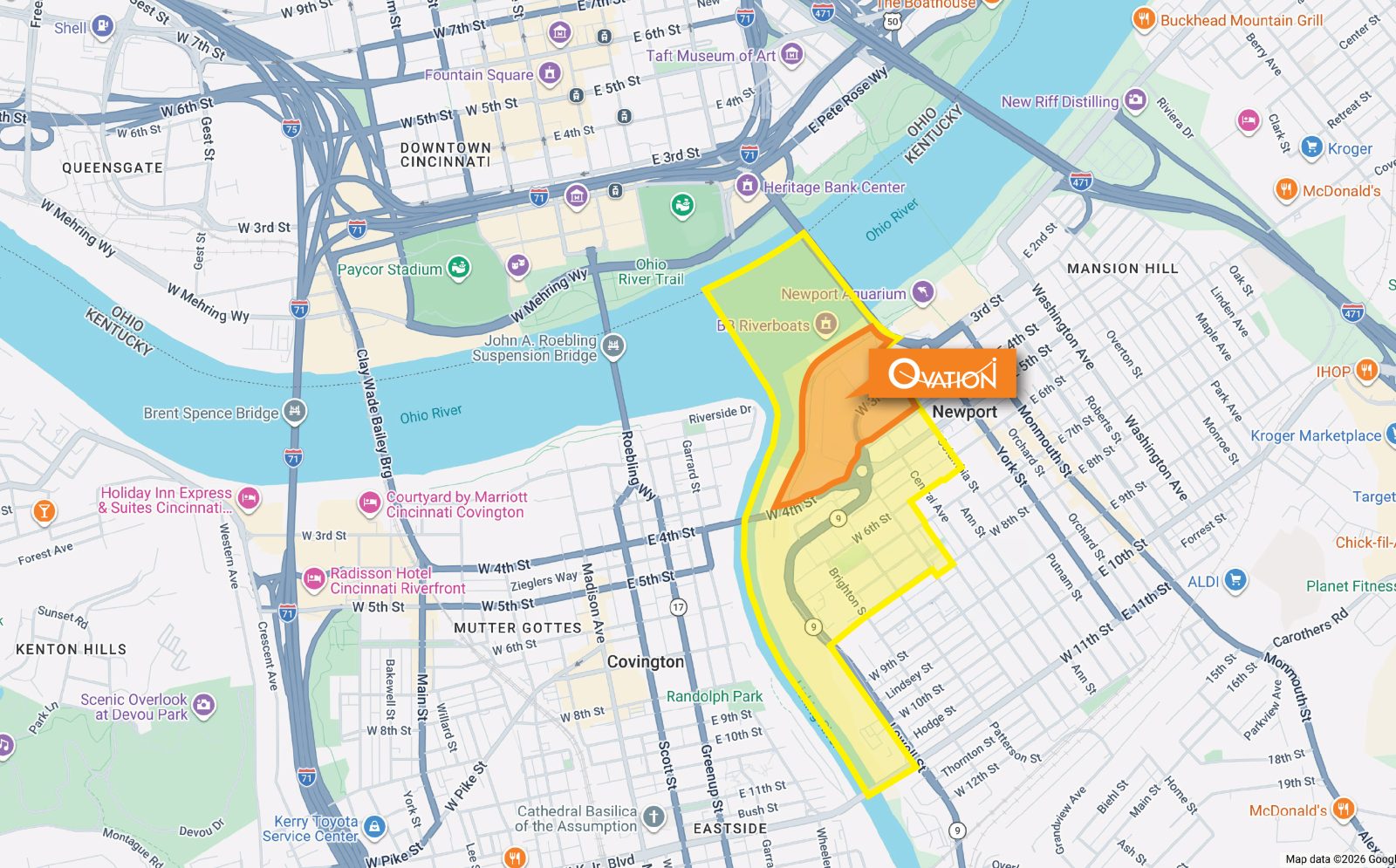
Here is how a typical development investment works:
1. An Investor Realizes A Capital Gain
This could come from selling stock, real estate, or a business. Generally, the investor has 180 days to invest the gain in a QOF. They need to reinvest the gain amount, rather than all the sale proceeds. Special timing rules can apply to partnership gains.
2. The Investor Contributes Cash for Equity in the QOF
A loan to the fund does not qualify for the investor tax benefits.
3. The QOF Invests in the Development
A common structure is a QOF investing in a separate project LLC that qualifies as an Opportunity Zone business.
4. The project builds, leases, and operates the property
While the fund and project company maintain compliance.
New construction generally satisfies the “original use” requirement
because the building is first placed in service by the qualifying project entity. That makes ground-up development a natural fit; it generally avoids the separate substantial-improvement test used for existing buildings.| Federal tax benefit | Investment made beginning January 1, 2027 |
|---|---|
| Tax deferral on the original gain | Generally lasts five years, unless triggered earlier |
| Reduction in the original taxable gain | Generally 10% after five years |
| Gain on the new investment | Potential exclusion after holding at least 10 years, with appreciation protection capped at the 30-year valuation |
The original gain and the appreciation earned on the new investment are two separate tax calculations.
For example, assume an investor puts $1 million of eligible capital gain into a qualifying nonrural QOF in 2027:
- After five years, generally $900,000 of the original gain becomes taxable, reflecting the 10% basis adjustment
- If the investment is sold after 10 years for $2 million, the $1 million of investment appreciation could be excluded from federal income tax, assuming continued compliance and the required election
This simplified example excludes operating income, distributions, fees, and state taxes. The investor also needs liquidity to pay the original-gain tax in year five. For the construction project, several practical requirements drive the structure:
- Asset compliance: The QOF generally must hold at least 90% qualifying assets, with periodic testing
- Construction cash: A project subsidiary can generally use a 31-month working-capital safe harbor supported by a written budget, expenditure schedule, and substantial compliance. Certain projects can qualify for longer periods
- Operations and leasing: The property must support an active trade or business. Merely entering into a triple-net lease, without sufficient operating activity, can create qualification problems.
Let's Start A Conversation
Corporex is interested in connecting with experienced developers who see the potential of Ovation and share our vision for its future.